


The Thai Elephant: A Sacred National Treasure Facing an Uncertain Future
A Special Endangered Species Report from the Thailand Ambassador of the Shaker Global Animal Protection Foundation
Thailand is known throughout the world for its natural beauty, ancient temples, gracious culture and deep spiritual traditions. Among all the animals connected to our national identity, none occupies a more important or beloved place than the Thai elephant.
Arin · Thailand Honorary Ambassador for Animal Compassion•••◷ 5 min read
 Vatcharin KaewkaiwThailand Honorary Ambassador for Animal Compassion · ThailandVIEW ALL REPORTS →
AT A GLANCE
Key Points
- Thailand is known throughout the world for its natural beauty, ancient temples, gracious culture and deep spiritual traditions.
- Among all the animals connected to our national identity, none occupies a more important or beloved place than the Thai elephant.
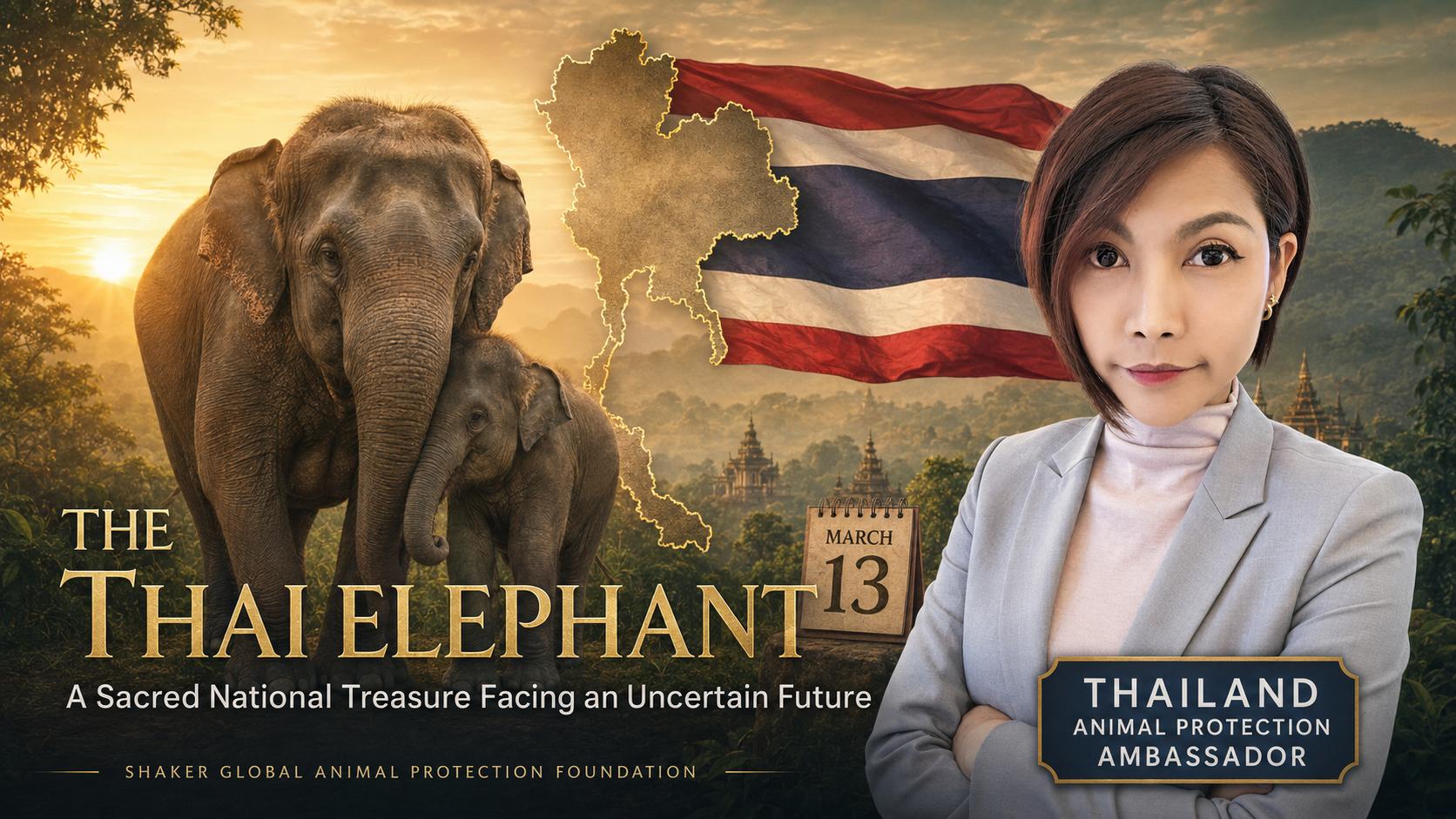
The Thai elephant is far more than an animal living within Thailand’s forests. For centuries, elephants have been deeply connected to the nation’s history, royal traditions, spiritual life, communities, and cultural identity. They represent strength, wisdom, loyalty, dignity, and an enduring bond between Thailand’s people and its natural heritage.
Today, however, this extraordinary national treasure faces an uncertain future.
The elephant native to Thailand is the Asian elephant (Elephas maximus), primarily represented by the Indian elephant subspecies, Elephas maximus indicus. The Asian elephant is officially classified as an Endangered species on the International Union for Conservation of Nature Red List.
According to the most recent national assessment conducted through cooperation between the Government of Thailand and the IUCN SSC Asian Elephant Specialist Group, Thailand is estimated to have approximately 4,013 to 4,422 wild elephants and approximately 3,500 to 4,000 captive or domesticated elephants, representing an estimated combined population of approximately 7,500 to 8,400 elephants.
Thailand’s wild elephants are distributed across major forest complexes and approximately 90 protected areas, including national parks and wildlife sanctuaries. Although conservation efforts have helped elephant numbers increase in certain areas, population numbers alone do not determine whether the species is secure.
The greater question is whether elephants have enough safe, connected, and sustainable habitat in which to survive.
Elephants require extensive territory, reliable water, abundant vegetation, safe migration corridors, and sufficient separation from dangerous roads, farms, and expanding human settlements. As forests become increasingly fragmented by development, agriculture, roads, plantations, and communities, elephant herds can become isolated or forced beyond protected areas in search of food and water.
This has contributed to one of Thailand’s most serious conservation challenges: human–elephant conflict.
When elephants enter agricultural areas, a single night can destroy crops that farmers have spent months cultivating. At the same time, elephants leaving fragmented forests may face electrocution, vehicle collisions, poisoning, traps, gunshots, and other dangers.
Human–elephant conflict must therefore never be viewed simply as a struggle between people and animals. In many cases, both are being forced to compete for increasingly limited space.
Protecting Thailand’s elephants requires protecting the communities that live beside them as well. Sustainable solutions may include preserving and reconnecting natural elephant corridors, restoring food and water resources within protected forests, improving early-warning systems, establishing trained rapid-response teams, supporting affected farmers, improving road safety near elephant habitats, strengthening veterinary and rescue capabilities, and combating poaching and illegal wildlife trafficking.
Thailand’s responsibility also extends beyond elephants living in the wild.
For generations, domesticated elephants worked alongside mahouts—skilled handlers and caretakers whose knowledge was often passed from one generation to another. Following Thailand’s 1989 prohibition on commercial logging in natural forests, many working elephants and their mahouts transitioned into the tourism industry.
Tourism can provide resources necessary for feeding and caring for elephants, but elephant welfare must always come before entertainment. Captive elephants require adequate food, clean water, veterinary care, social interaction, movement, rest, appropriate shelter, and environments that allow natural behavior.
Responsible elephant protection must therefore include both wild elephants and elephants living under human care.
The importance of protecting elephants also extends far beyond the survival of a single species. Elephants are sometimes described as “ecosystem engineers” because their movements and behavior can influence entire landscapes.
As elephants travel, they disperse seeds, influence vegetation, create pathways through forests, contribute nutrients to ecosystems, and can help other wildlife gain access to food, water, and habitat. Protecting sufficient territory for elephants can therefore help preserve forests, watersheds, plants, birds, reptiles, insects, and many other mammals sharing the same ecosystem.
As the Thailand Animal Protection Ambassador of Shaker Global Animal Protection Foundation, I respectfully nominate the Thai elephant as an Endangered Species of Honor for the Kingdom of Thailand.
My responsibility as an Ambassador is to observe, learn, document, communicate, and advocate. Through this role, I hope to bring the condition of endangered animals in Thailand to greater national and international attention while supporting responsible cooperation among communities, animal-welfare advocates, conservation specialists, veterinarians, government agencies, researchers, and credible organizations.
I respectfully invite the people of Thailand and friends of Thailand throughout the world to support the humane and scientifically responsible protection of our elephants.
We must reject cruelty, irresponsible exploitation, poaching, and illegal wildlife trafficking. We must encourage responsible tourism, stronger animal-welfare standards, protected and connected habitats, and peaceful coexistence between elephants and local communities.
Most importantly, protecting the Thai elephant does not mean choosing an animal over a human being. Genuine conservation protects both. The safety of rural families, the dignity and livelihoods of mahouts, and the survival and welfare of elephants are interconnected.
A Message of Gratitude
I extend my sincere appreciation to Shaker Global Animal Protection Foundation for giving me the opportunity to become part of this global mission and to serve as its Animal Protection Ambassador in Thailand.
I am grateful for the confidence placed in me and for the opportunity to represent Thailand’s animals, natural heritage, and conservation concerns before a wider international audience.
This honorary responsibility provides an opportunity to give a voice to animals that cannot speak for themselves and to bring greater attention to endangered species requiring protection, research, understanding, and compassionate action.
I am proud to begin this mission with the Thai elephant—an animal representing the heart, history, strength, wisdom, and enduring spirit of Thailand.
Our Call to the World
The Thai elephant carried kings, served communities, and helped build a nation. Today, it is our responsibility to carry the Thai elephant safely into the future.
Let us protect its forests.
Let us respect its dignity.
Let us support the communities living beside it.
Let us improve the lives of elephants under human care.
And let us ensure that future generations will know the Thai elephant not only through flags, temples, books, monuments, and ancient stories, but as a living and protected national treasure.
The elephant has stood beside Thailand for centuries.
Now Thailand—and the world—must stand beside the elephant.
Presented by:
Thailand Animal Protection Ambassador
Shaker Global Animal Protection Foundation
Shaker Global Animal Protection Foundation is headquartered in Cheyenne, Wyoming, USA, and operates as part of the Shaker Global humanitarian network founded by Morad Shaker. The Foundation works internationally to build awareness, identify endangered-species needs, connect credible information, encourage responsible animal welfare, and develop meaningful preservation-focused cooperation around the world.
Ambassador Reports
South Africa’s Black Rhinoceros: Crailisha Diop Calls for Global Action to Protect an African Icon
Aug 31, 2026
Ambassador Reports
A Youth Ambassador’s Appeal for One of Hawaiʻi’s Most Endangered Native Animals
Aug 18, 2026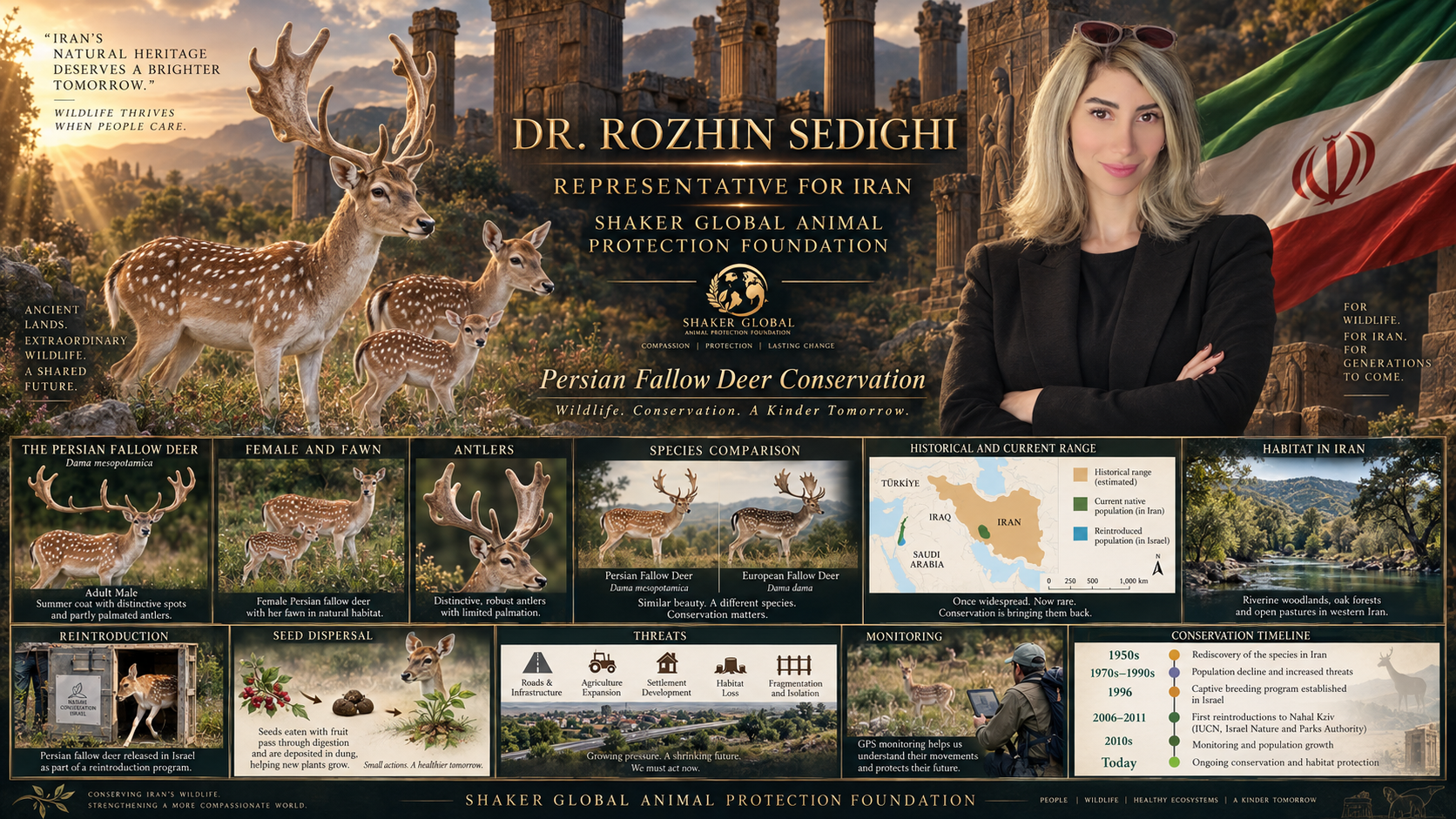
Ambassador Reports
Persian Fallow Deer: The Remarkable Story of One of the World's Rarest Deer
Sep 5, 2026Read More About
WHAT READERS CAN FOLLOW NEXT
Trending Now
- 1Morad Shaker: A 20-Year Dream Is Beginning to Come Truebreaking-news · Sep 21, 2026
- 2Operation Bangladesh Sets Aside 25,000 Beneficiary Allocations for Timor-LesteWorld · Sep 20, 2026
- 3Operation Bangladesh Allocates 1.2 Million Reserve Places to 11 Additional CountriesPoverty & Development · Sep 19, 2026
- 4Morad Shaker Opens Nigeria Petition With Reserve of Up to 100,000 PositionsPoverty & Development · Sep 15, 2026
- 5Persian Fallow Deer: The Remarkable Story of One of the World's Rarest DeerAmbassador Reports · Sep 5, 2026
#ambassador-report#ambassador-reports