

YOUTH AMBASSADOR SPECIAL REPORT
Protecting Hawaiʻi’s Hawaiian Monk Seal
A Youth Ambassador’s Appeal for One of Hawaiʻi’s Most Endangered Native Animals
By Anahita Kate Neolani Shaker
Age 13 | United States Youth Ambassador
Shaker Global Animal Protection Foundation
Hawaiʻi is known around the world for its beautiful beaches, blue ocean and extraordinary wildlife. But some of the animals that make these islands so special are struggling to survive. One of them is the Hawaiian monk seal, an endangered marine mammal found naturally only in Hawaiʻi. There are only about 1,600 Hawaiian monk seals remaining, which means that every seal, every mother and every new pup can be important to the future of the species.
I am 13 years old, and as the United States Youth Ambassador for the Shaker Global Animal Protection Foundation, I wanted my first special report to focus on an animal from Hawaiʻi. I chose the Hawaiian monk seal because protecting an animal that exists nowhere else in the world is not only the responsibility of scientists and government agencies. I believe it is also the responsibility of people who live here, people who visit Hawaiʻi and young people like me who will inherit responsibility for these islands in the future.
An Encounter I Will Remember
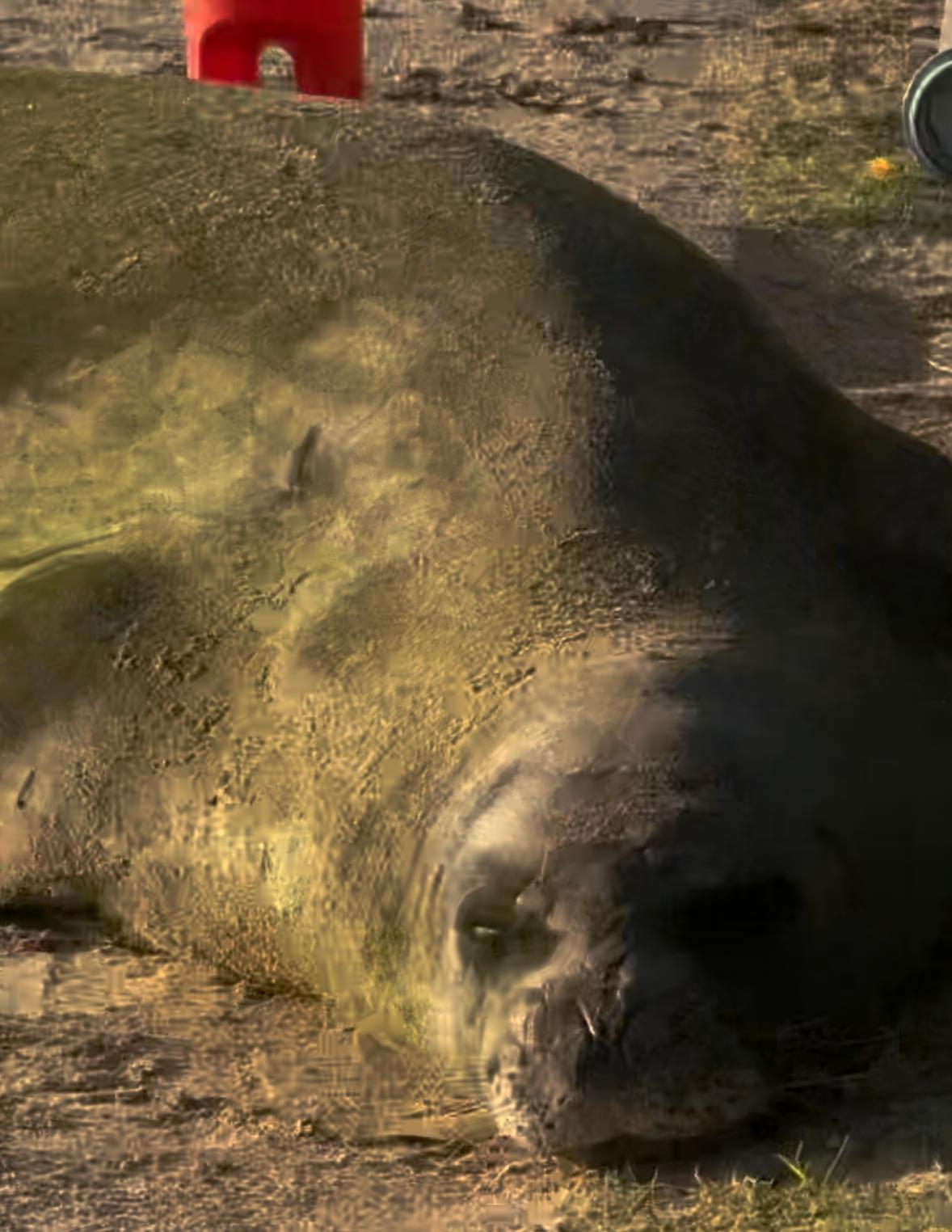
One reason this subject became personal to me was an encounter my family experienced on Oʻahu. While walking near the beach in Waikīkī, we saw a Hawaiian monk seal come ashore. My father, Morad Shaker, recorded the encounter. People responsible for protecting the area quickly became involved and space was created around the animal. At the time, it was exciting to see such an unusual animal so close to one of the busiest areas in Hawaiʻi. After learning more about Hawaiian monk seals, however, I understand why protecting that space was so important.
The seal was not coming to the beach to entertain people. It was using its natural habitat. The beach where people walk, swim, take photographs and enjoy vacations is also a place where a Hawaiian monk seal may need to rest. That experience taught me something simple but important: when wildlife comes into a place that people are using, it does not automatically mean the wildlife has entered our space. Sometimes we are standing in theirs.
An Animal Found Nowhere Else
The Hawaiian monk seal is endemic to Hawaiʻi, meaning this species is naturally found nowhere else on Earth. Its Hawaiian name is ʻīlio holo i ka uaua. Hawaiian monk seals spend much of their lives in the ocean, where they feed and travel, but they also depend on beaches for resting, molting, giving birth and caring for their pups. That connection between land and ocean makes protecting both environments important to their survival.
According to NOAA Fisheries, approximately 1,600 Hawaiian monk seals remain. Most live in the Northwestern Hawaiian Islands, with several hundred living throughout the main Hawaiian Islands. The population has shown encouraging improvement in recent years, but Hawaiian monk seals remain endangered and continue to face serious threats. When a species has such a small population, losing even individual animals can matter, particularly breeding females and young seals that represent future generations.
Why Are Hawaiian Monk Seals Still in Danger?
Life in the Pacific can be difficult even without human interference. Hawaiian monk seals face natural challenges, but human activity has created additional dangers. Fishing hooks and gear can injure seals. Abandoned nets and marine debris can entangle them. Pollution can affect their environment, and human disturbance can prevent a tired seal from getting the rest it needs.
One of the threats I found especially surprising while researching this report was toxoplasmosis. The disease is caused by a parasite that reproduces in cats. The parasite can enter the environment through cat feces, travel through waterways and eventually reach the ocean, where Hawaiian monk seals can become exposed. It shows how something happening far from a seal can eventually affect its life. Protecting an ocean animal sometimes begins with decisions people make on land.
Another threat is human behavior. People may approach seals because they are excited, want a photograph or believe an animal looks friendly. But getting too close, touching, feeding, chasing or disturbing a Hawaiian monk seal can be dangerous for the animal and for the person. A photograph is never worth causing stress to an endangered animal. Loving wildlife should mean respecting what the animal needs, even when that means admiring it from farther away.
Conservation Is Working
There is also an important reason to have hope. Scientists, veterinarians, wildlife responders, government agencies, conservation organizations and volunteers have spent years working to save Hawaiian monk seals. They rescue injured animals, remove hooks and fishing gear, disentangle seals, rehabilitate animals when possible, protect mothers and pups, clean dangerous marine debris and study the population so conservation decisions can be based on evidence.
NOAA has estimated that a significant portion of Hawaiian monk seals alive today are alive because of conservation interventions. To me, that may be one of the most encouraging facts in this entire story. It demonstrates that people really can make a difference. An endangered species does not automatically have to become an extinct species. When people care enough to act, conservation can work.
That is especially important for young people to understand. We hear many frightening stories about wildlife disappearing, oceans becoming polluted and habitats being damaged. Sometimes those problems can feel so enormous that we wonder whether anything we do will matter. The Hawaiian monk seal shows us that action matters. Saving one animal matters. Protecting one mother and pup matters. Removing one dangerous piece of fishing gear matters. Giving one exhausted seal enough space to rest matters.
When You See a Monk Seal
Seeing a Hawaiian monk seal in the wild should be an unforgettable experience, but the best way to show respect is to give the animal space. Wildlife authorities establish recommended distances and may create larger protected areas around mothers and pups. Visitors should follow posted signs, barriers and instructions from wildlife personnel. Dogs should also be kept away from seals.
SEE A HAWAIIAN MONK SEAL? GIVE THEM SPACE.
Observe quietly from a safe distance.
Never touch, chase or feed a seal.
Keep pets away.
Respect barriers and wildlife personnel.
Give mothers and pups extra space.
SGAPF Youth Wildlife Awareness.
When I think back to the monk seal we encountered on Oʻahu, I now understand the response around that animal much better. Protecting one seal may look like a small action on one beach, but when only about 1,600 animals remain, protecting individuals is part of protecting an entire species.
What My Generation Can Do?
I am 13 years old. I cannot personally rescue an injured Hawaiian monk seal, and young people should never attempt to handle wildlife themselves. I cannot run a government wildlife agency or make every environmental law. But being young does not mean being powerless. We can learn. We can teach our friends. We can keep beaches cleaner. We can reduce unnecessary plastic waste. We can respect wildlife boundaries and encourage other people to do the same. We can use social media to educate people instead of using endangered animals simply to get attention.
Young people can also ask questions. Why is an animal endangered? What is being done to protect it? What can our schools teach us? What can our families change? What organizations are already doing good work, and how can we responsibly support them? We do not need to pretend that we already know everything. Sometimes helping begins by listening to the people who have spent their lives studying and protecting these animals.
My generation will eventually inherit responsibility for Hawaiʻi and for the natural world around us. I do not want us to inherit photographs of animals that used to exist. I want future children to experience living wildlife. I want them to stand on a beach in Hawaiʻi and know that somewhere nearby a Hawaiian monk seal may still be swimming through the Pacific.
A Youth Ambassador’s Request for Cooperation
As United States Youth Ambassador for the Shaker Global Animal Protection Foundation, I respectfully ask Hawaiʻi’s wildlife agencies, researchers, conservation organizations, educators, community leaders and others working to protect Hawaiian monk seals to continue strengthening the extraordinary work already being done. I also invite appropriate organizations to communicate with the Shaker Global Animal Protection Foundation about responsible opportunities for education, public awareness, youth participation and conservation support.
The Foundation’s role should never be to interfere with trained wildlife professionals. We want to listen, learn and determine where we can genuinely contribute. If there are responsible ways for our Foundation, our Youth Ambassador program and our international network to help bring greater attention to the Hawaiian monk seal and the people protecting it, we would like to explore those opportunities.
My Appeal for the Hawaiian Monk Seal
I hope that when I am older, Hawaiian monk seals will still come out of the Pacific and rest on Hawaiʻi’s beaches. I hope children who have not even been born yet will have the opportunity to see one and understand that they are looking at an animal found naturally nowhere else on Earth. Protecting them is about more than saving one endangered species. It is about deciding what kind of Hawaiʻi we want to leave behind.
There are still Hawaiian monk seals swimming in our ocean today because people decided they were worth protecting. Scientists studied them. Veterinarians treated them. Wildlife responders rescued them. Communities gave them space. People removed dangerous debris. Government agencies protected habitat. Those actions have already changed the future for individual animals, and together they can help change the future of the species.
As a 13-year-old Youth Ambassador, my message is simple: we still have time to help. Every Hawaiian monk seal matters, and every generation has a responsibility to protect what it has been given. I hope my generation will be remembered as one that chose to protect these animals while we still had the opportunity.
Anahita Kate Neolani Shaker
Age 13 | United States Youth Ambassador