


South Africa’s Black Rhinoceros: Crailisha Diop Calls for Global Action to Protect an African Icon
A Special Endangered Species Report by Crailisha Diop, South Africa Ambassador of the Shaker Global Animal Protection Foundation
In the early morning light of the South African bush, the black rhinoceros can appear almost prehistoric—a powerful silhouette moving quietly through the landscape. Its heavy body, hooked upper lip and magnificent horns create an image of extraordinary strength. Yet behind that strength is a painful truth: the black rhinoceros is fighting for survival.
Crailisha Diop · South Africa Global Ambassador for Animal Compassion•••◷ 7 min read
 🇿🇦 Crailisha DiopSouth Africa Global Ambassador for Animal Compassion · South AfricaVIEW ALL REPORTS →
AT A GLANCE
Key Points
- In the early morning light of the South African bush, the black rhinoceros can appear almost prehistoric—a powerful silhouette moving quietly through the landscape.
- Its heavy body, hooked upper lip and magnificent horns create an image of extraordinary strength.
- Yet behind that strength is a painful truth: the black rhinoceros is fighting for survival.
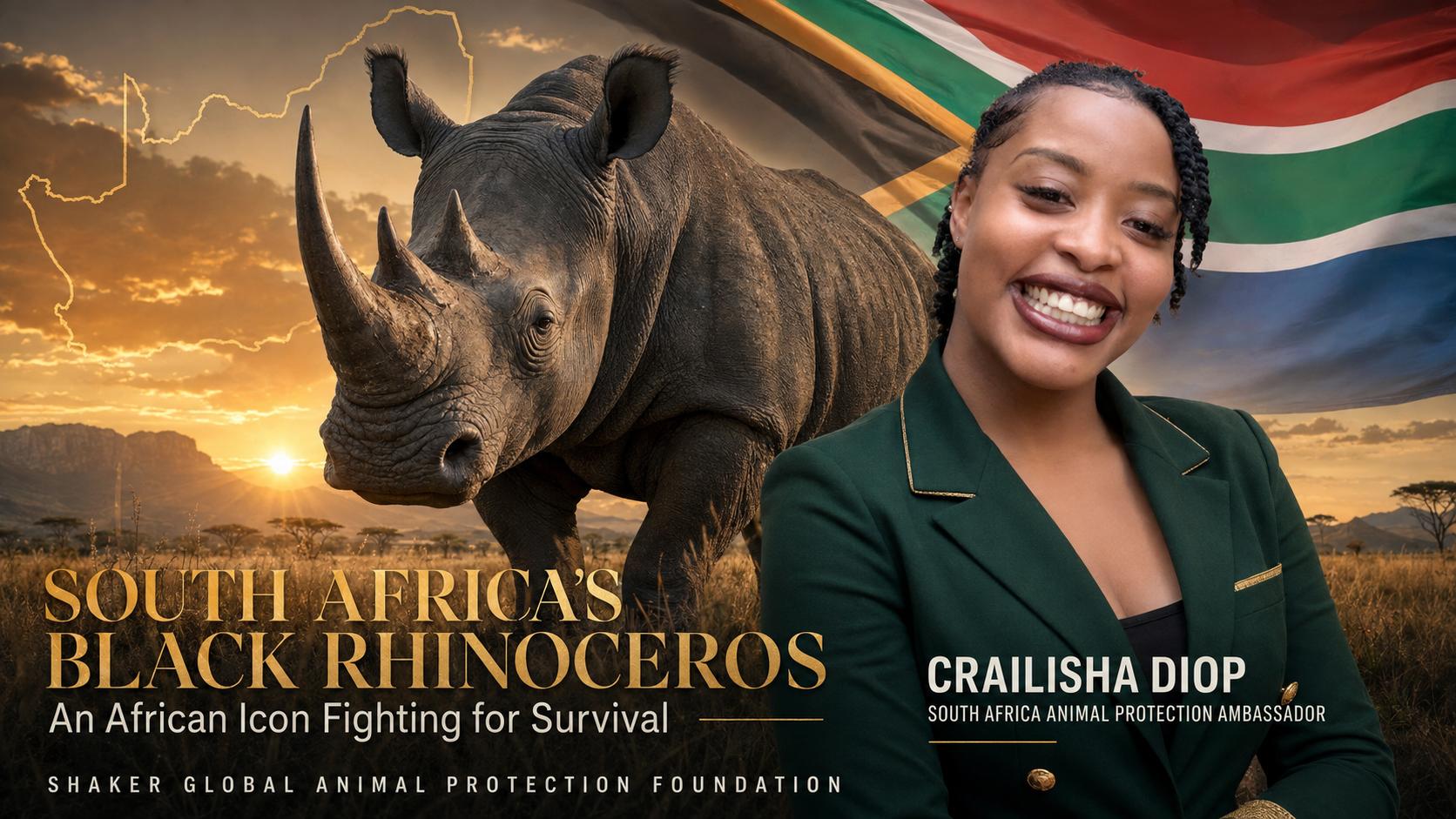
In the early morning light of the South African bush, the black rhinoceros can appear almost prehistoric—a powerful silhouette moving quietly across the landscape. Its heavy body, distinctive hooked upper lip, and magnificent horns create an image of extraordinary strength. Yet behind that strength lies a painful reality: the black rhinoceros is still fighting for survival.
“My name is Crailisha Diop, and I am deeply honored to serve as the South Africa Animal Protection Ambassador of Shaker Global Animal Protection Foundation,” said Diop. “Through this special report, I wish to bring the voice of the endangered black rhinoceros from the heart of Africa to an international audience.”
The black rhinoceros cannot stand before the world and explain the dangers it faces. It cannot contact a news organization, speak before an international institution, or ask humanity for protection. It depends upon compassionate people to speak where it cannot—and to act before silence becomes extinction.
The black rhinoceros, scientifically known as Diceros bicornis, is classified as Critically Endangered globally.
During the 1960s, as many as 100,000 black rhinos may have lived across Africa. By the middle of the 1990s, relentless poaching and habitat loss had reduced the population to fewer than 2,500 animals.
Through decades of conservation, security, monitoring, breeding, and relocation programs, the population has gradually recovered to approximately 6,400–6,500 black rhinoceroses across Africa.
That recovery represents meaningful progress, but it must never be mistaken for safety. Today’s population remains only a small fraction of the number of black rhinos that once lived across the African continent.
South Africa is believed to protect approximately 2,000 black rhinoceroses, making the country one of the world’s most important strongholds for the species. Nearly one out of every three surviving black rhinos may live within South Africa.
This gives South Africa both an extraordinary privilege and an extraordinary responsibility.
Despite its name, the black rhinoceros is not actually black. Its skin normally appears gray, with its color often changing according to the soil and mud in which it rolls.
The black rhinoceros is more accurately distinguished from the white rhinoceros by the shape of its mouth. It has a pointed, hooked upper lip specially adapted for grasping leaves, shoots, and branches, which is why it is also known as the hook-lipped rhinoceros.
Black rhinos are browsers rather than grazers. By selectively feeding on shrubs and woody vegetation, they help shape plant communities and contribute to ecological balance. Their movements create pathways for other animals, while their dung helps distribute seeds and nutrients throughout the landscape.
Protecting the black rhinoceros therefore means protecting far more than one species. It also contributes to the preservation of the wider South African ecosystem.
One of the greatest threats facing the black rhino is the illegal trade in its horn.
A rhinoceros horn is made primarily of keratin—the same basic material found in human hair and fingernails. Nevertheless, illegal international demand has transformed rhino horn into an extremely valuable wildlife commodity, fueling criminal trafficking networks and deadly poaching.
A rhinoceros may be tracked, shot, and mutilated solely for its horn. In some cases, severely wounded animals may still be alive after their horns have been brutally removed.
The consequences extend beyond the individual animal. When a mother is killed, her calf may be left frightened, vulnerable, and unable to survive without human rescue. The loss of a breeding female also removes every future calf she might have produced from an already fragile population.
Black rhinos reproduce slowly. A female generally gives birth to only one calf after a pregnancy lasting approximately 15 to 16 months, and several years may pass before she produces another calf.
This means conservationists cannot quickly replace animals lost to poaching.
Every black rhinoceros matters.
South Africa protects the largest combined rhinoceros population in the world, including both black and white rhinos. Unfortunately, this conservation success has also made the country a major target for international wildlife crime.
In 2023, 499 rhinos were illegally killed in South Africa. In 2024, that number declined to 420. Although the reduction represents progress, the figure still amounted to more than one rhinoceros being killed per day on average.
These statistics include both black and white rhinoceroses, but every poaching incident places additional pressure on conservation agencies, rangers, veterinarians, private reserves, investigators, and surrounding communities.
The men and women protecting rhinos often work under extremely difficult and dangerous conditions. Rangers patrol enormous territories and may confront armed criminal groups. Veterinarians treat wounded animals and care for orphaned calves. Investigators pursue financial and trafficking networks that can extend far beyond South Africa’s borders.
Technology—including drones, tracking devices, camera systems, and data analysis—can strengthen anti-poaching efforts. Some reserves also dehorn rhinoceroses under veterinary supervision in an effort to reduce their attractiveness to poachers.
However, dehorning alone cannot solve the crisis. Horns grow back, procedures must be repeated, and even dehorned animals may still face danger.
True protection requires a combination of law enforcement, international cooperation, habitat preservation, community participation, public education, and sustained conservation support.
Local communities must also be treated as conservation partners rather than outsiders.
When people living near wildlife areas receive meaningful benefits from wildlife protection—including employment, education, tourism opportunities, infrastructure, and participation in conservation decisions—the survival of endangered animals becomes connected to the well-being of surrounding communities.
Young South Africans should also be encouraged and supported in becoming wildlife veterinarians, scientists, rangers, researchers, educators, and future conservation leaders.
Protecting endangered species should never be viewed as the responsibility of government agencies or nonprofit organizations alone. It is a shared national and international mission.
The black rhinoceros is part of South Africa’s natural inheritance, but it is also part of the world’s living heritage.
My Commitment as South Africa Ambassador
“As the South Africa Ambassador of Shaker Global Animal Protection Foundation, I accept the responsibility to bring attention to endangered animals, document their circumstances, and help carry their silent appeal beyond the borders of South Africa,” said Crailisha Diop.
“I sincerely thank Shaker Global Animal Protection Foundation, a United States-registered nonprofit organization, for selecting me to serve in this honorable role.”
“This appointment gives me the opportunity to represent animals that cannot speak for themselves and to bring their needs, dangers, and stories to the attention of an international animal-protection organization.”
Diop also expressed her appreciation to the Foundation’s founder, Morad Shaker, for directing greater attention toward Africa and recognizing the importance of including African wildlife within the global conversation surrounding animal welfare, endangered-species protection, and environmental responsibility.
Africa is home to some of the most magnificent animals on Earth, but admiration alone will not protect them. They require awareness, cooperation, responsible leadership, conservation resources, and meaningful action.
A Call from South Africa to the World
The story of the black rhinoceros is both a warning and a source of hope.
It is a warning because human greed and illegal wildlife trafficking pushed this ancient species dangerously close to extinction within only a few decades.
But it is also a story of hope because determined conservation efforts helped the population recover from fewer than 2,500 animals to approximately 6,500 across Africa.
We have proved that decline can be reversed.
But recovery is not completion.
We must continue combating the illegal rhino-horn trade. We must support the rangers, veterinarians, investigators, and conservation professionals working on the front line. We must preserve and expand secure habitats, involve communities as respected partners, reduce international demand for rhino horn, and prosecute the criminal networks profiting from wildlife destruction.
The black rhinoceros has survived for millions of years. It should not disappear during our generation because humanity failed to protect it.
Let us ensure that future generations of South African children encounter the black rhinoceros as a living animal—not merely as a photograph, sculpture, museum exhibit, or story about something their country once possessed.
The black rhinoceros has no human voice.
Today, I offer mine.
And I invite South Africa and the international community to raise theirs with me.
Presented by Crailisha Diop
South Africa Animal Protection Ambassador
Shaker Global Animal Protection Foundation
Shaker Global Animal Protection Foundation is headquartered in Cheyenne, Wyoming, USA, and operates as part of the Shaker Global humanitarian network founded by Morad Shaker. The Foundation works internationally to raise awareness, identify endangered-species needs, connect credible information, strengthen animal-protection advocacy, and encourage meaningful conservation cooperation across countries and regions.
Ambassador Reports
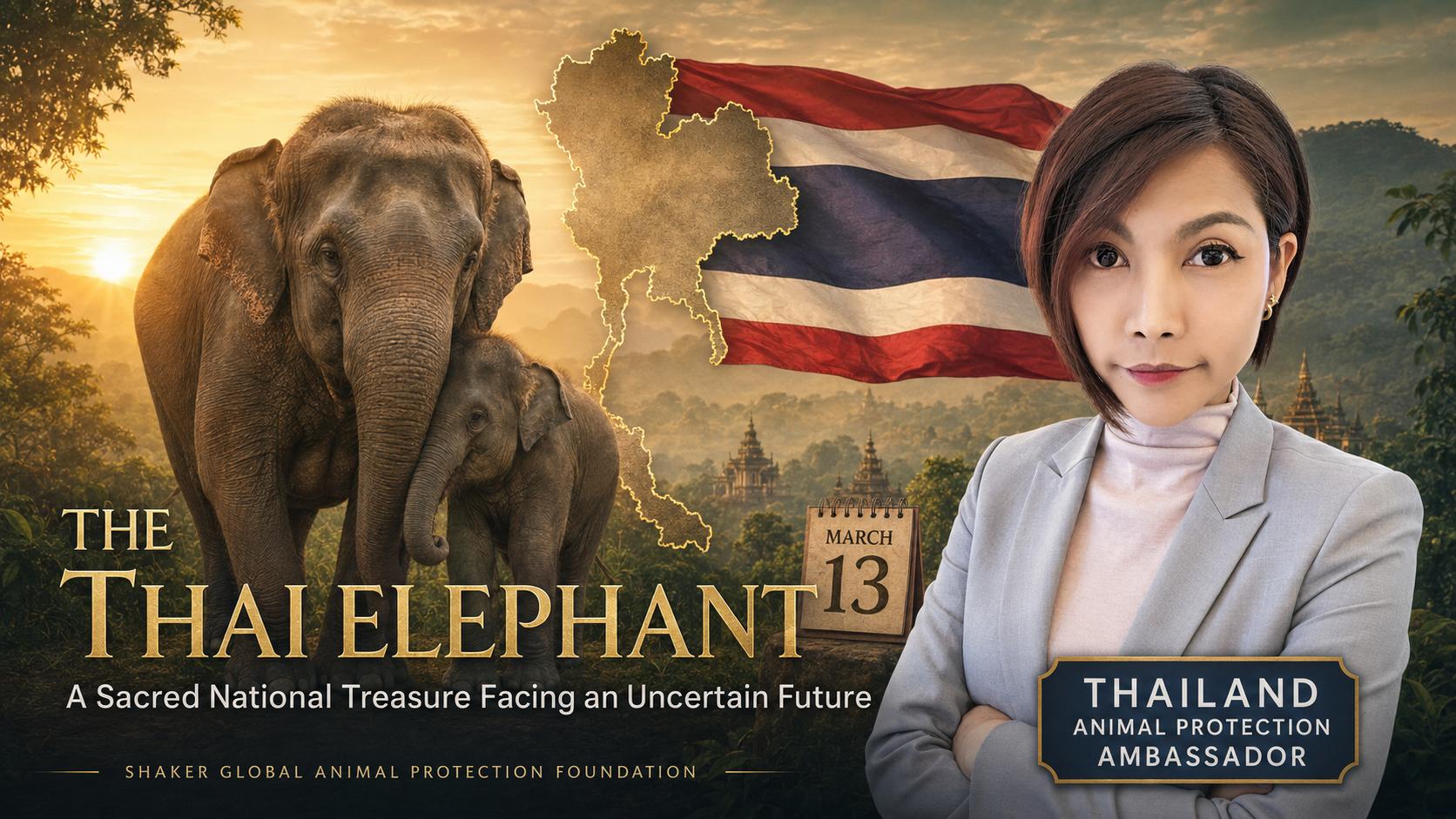
The Thai Elephant: A Sacred National Treasure Facing an Uncertain Future
Aug 31, 2026
Ambassador Reports
A Youth Ambassador’s Appeal for One of Hawaiʻi’s Most Endangered Native Animals
Aug 18, 2026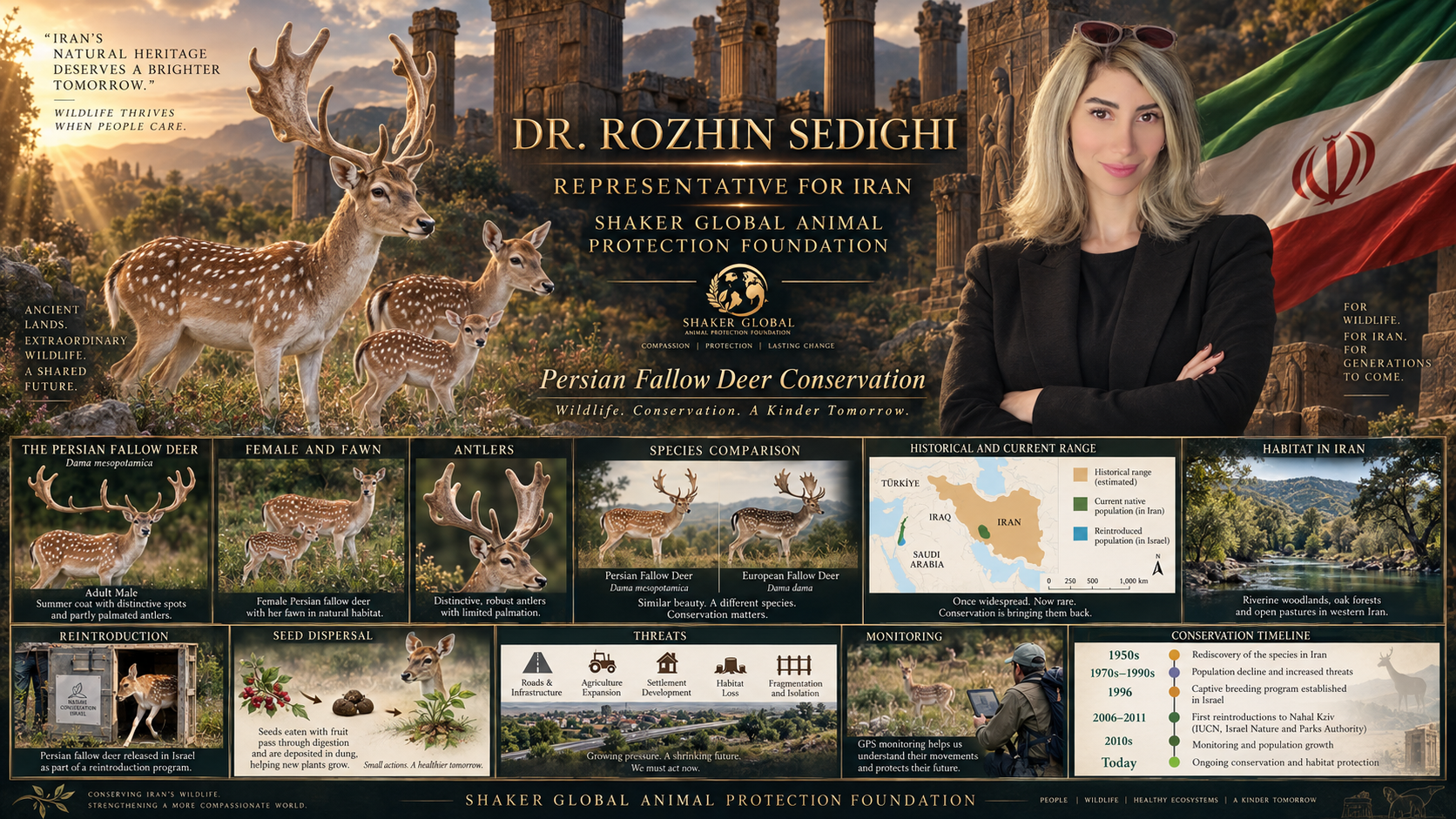
Ambassador Reports
Persian Fallow Deer: The Remarkable Story of One of the World's Rarest Deer
Sep 5, 2026Read More About
WHAT READERS CAN FOLLOW NEXT
Trending Now
- 1Morad Shaker: A 20-Year Dream Is Beginning to Come Truebreaking-news · Sep 21, 2026
- 2Operation Bangladesh Sets Aside 25,000 Beneficiary Allocations for Timor-LesteWorld · Sep 20, 2026
- 3Operation Bangladesh Allocates 1.2 Million Reserve Places to 11 Additional CountriesPoverty & Development · Sep 19, 2026
- 4Morad Shaker Opens Nigeria Petition With Reserve of Up to 100,000 PositionsPoverty & Development · Sep 15, 2026
- 5Persian Fallow Deer: The Remarkable Story of One of the World's Rarest DeerAmbassador Reports · Sep 5, 2026
#ambassador-report#ambassador-reports